
Search is undergoing a seismic shift. While many marketers are still relying on the outdated playbook of keywords and backlinks, a completely new category of optimization has arrived. This new era values citations over mere clicks, genuine authority over raw traffic, and active buyer intent over casual browsing.
Thank you for reading this post, don't forget to subscribe!The numbers are staggering: AI-driven traffic spiked by 527% between January and May 2025. Today, 56% of organizations are baking AI into their SEO workflows. This is not a slow evolution; it is a total overhaul of how the internet discovers information.
The Rise of the Answer Engine
If Google’s search index and ChatGPT’s conversational abilities merged, you would get Perplexity AI. This platform represents a new breed of “answer engines” where users no longer want a list of blue links—they want definitive, cited answers.
Perplexity’s rapid growth to a $14 billion valuation and 15 million monthly active users proves this model works. But the giants are pivoting, too. Google’s AI Overviews now appear in roughly 47% of search results, and competitors like Microsoft, OpenAI, Apple, and Meta are all racing to claim their share of the AI search market.
The Untapped “Blue Ocean” Opportunity
Most brands are missing the mark. They are fighting over highly saturated Google keywords while ignoring the massive, untapped potential of AI search engines.
The difference in user behavior is the real game-changer:
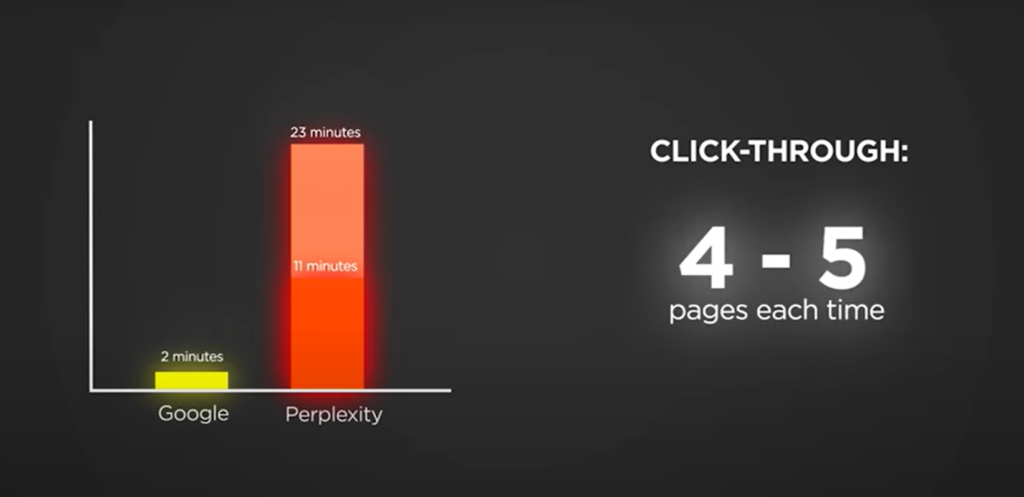
- Session Length: Users spend 11 to 23 minutes on Perplexity, compared to less than 2 minutes on traditional Google searches.
- Engagement: AI search users view 4 to 5 pages per session with remarkably low bounce rates.
- Buyer Intent: A blog drawing 400 visitors from an AI engine can easily outperform a site getting 10,000 Google visitors, because AI users are actively seeking solutions, not just browsing.
Citations Are the New Backlinks
In the AI search ecosystem, a citation equals instant credibility. When an engine like Perplexity or ChatGPT cites your content, it acts as a stamp of validation.
Interestingly, traditional media does not control this space. Blogs account for 33% of Perplexity’s citations, outpacing traditional news outlets at 24%. AI engines do not care about legacy domain authority; they care about structure, usefulness, and evidence. This levels the playing field, allowing smaller, high-quality sites to compete with massive media conglomerates.
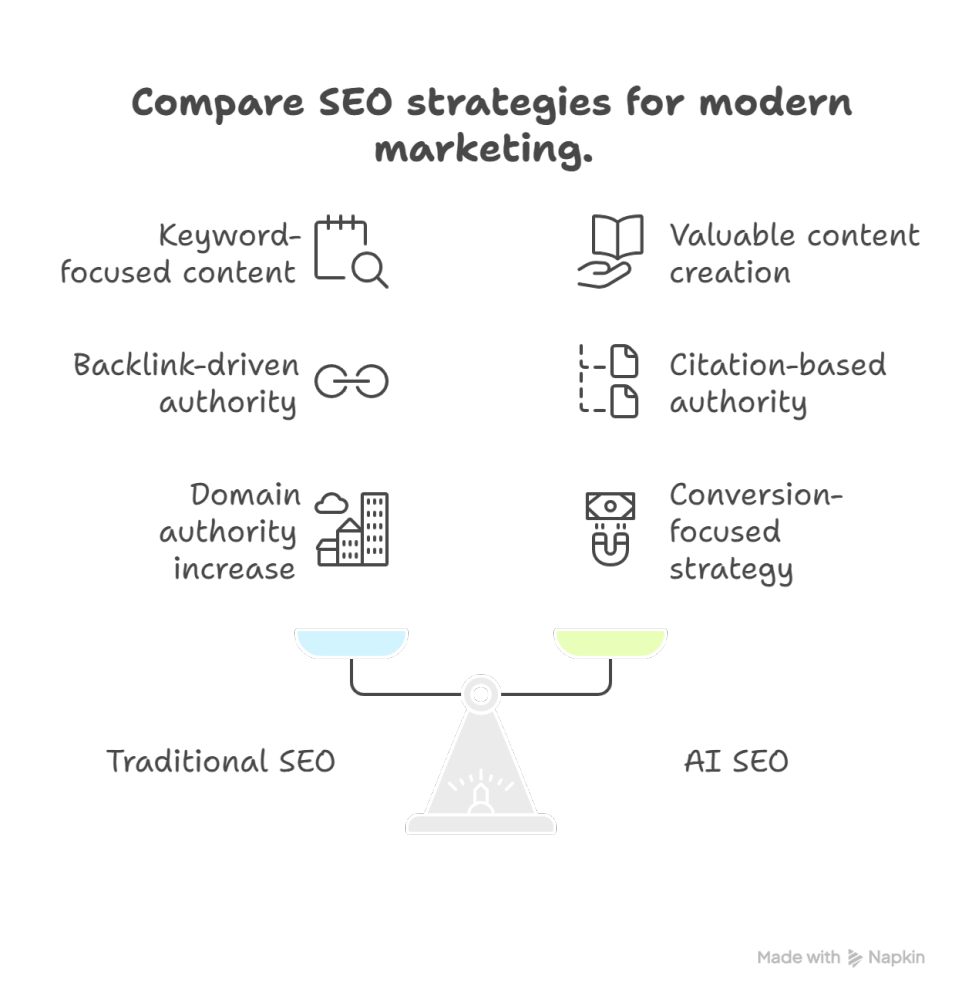
The AI SEO Flywheel: Create valuable content → Earn citations → Build authority → Attract more citations → Drive conversions.
From SEO to AEO (Answer Engine Optimization)
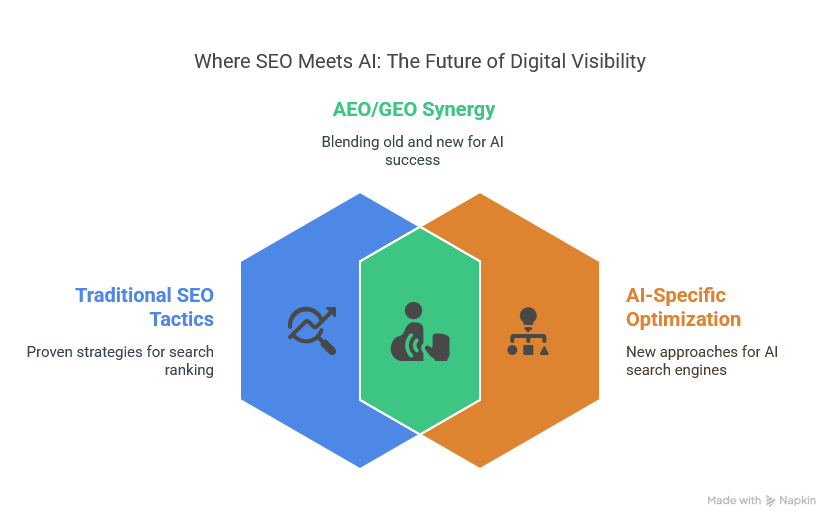
We are moving from Search Engine Optimization to Answer Engine Optimization. Generative Engine Optimization (GEO) relies on machine learning and intent analysis to get your brand featured directly in AI responses.
| Feature | Traditional SEO | AI SEO (AEO) |
| Primary Goal | Clicks and raw traffic | Citations and featured answers |
| User Intent | Casual browsing | Deep research and purchasing |
| Content Strategy | Keyword stuffing | Clear, concise answers (40-60 words) |
| Authority Metric | Backlinks and domain age | Evidence, structure, and original data |
| Speed to Impact | Months or years | Immediate (upon engine indexing) |
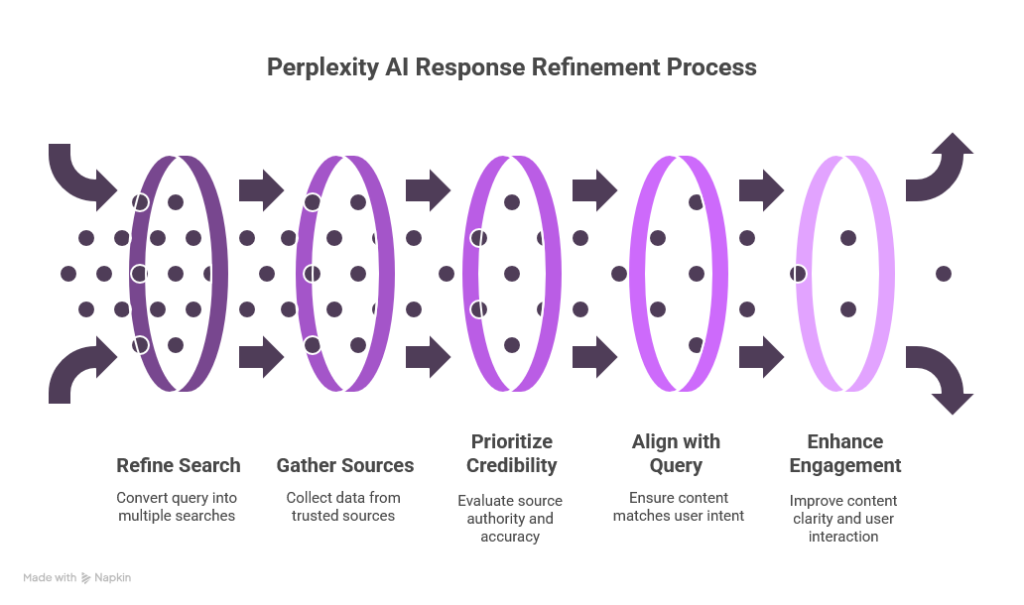
The 5-Pillar Content Framework for AI
To dominate AI search, your content must be easily digested by both humans and large language models.
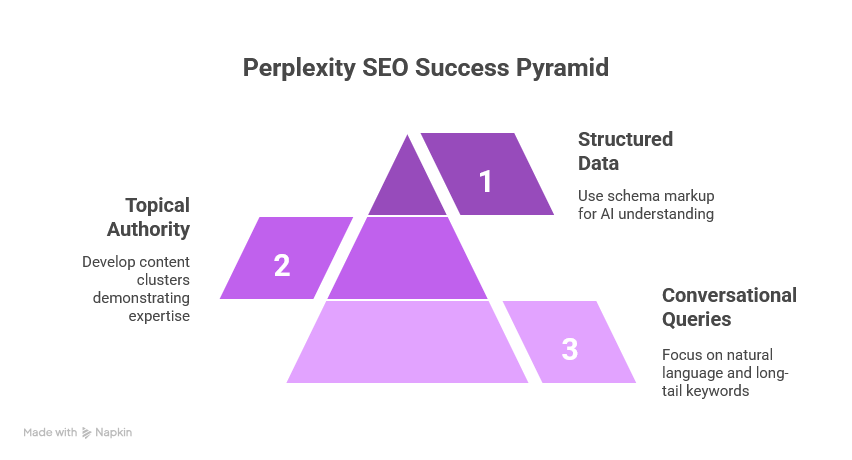
- Question-Answer Architecture: Build your content around the exact questions your customers are asking.
- Direct Answers with Evidence: Avoid vague language. Give definitive answers backed up by hard data.
- Scannable Structure: Use clear headers, bullet points, and numbered lists. AI engines extract data best from highly organized text.
- Original Data Creation: Publish proprietary surveys, case studies, and unique research. Original stats make your content indispensable to an AI’s knowledge base.
- Conversational Language: Write exactly how humans speak. AI models are trained on natural dialogue, not stiff corporate jargon.
Practical Implementation: The Perplexity + Claude 4 Workflow
Pairing Perplexity for research with Claude 4 for content generation creates an incredibly powerful workflow:
- Competitor Intelligence: Upload competitor content to Perplexity to instantly reverse-engineer their strategy and positioning.
- Content Repurposing: Feed video and podcast transcripts into Claude 4 to generate natural, conversational blog posts that AI engines love.
- Fact-Checking: Use Perplexity to rapidly audit your existing content library for outdated claims, keeping you safe from algorithm penalties.
- Link Research: Let Perplexity instantly source highly authoritative, relevant external links to bolster your content’s credibility.
The Early Mover Advantage
We are at the dawn of a massive platform shift. While competitors are still playing the old SEO game, early adopters of Answer Engine Optimization are building citation authority that will compound heavily over the next decade.
The principles are universal: structured formatting, evidence-based claims, and conversational language will work across any AI platform that ultimately wins the market. The AI SEO revolution is already here—the only question is how fast you will adapt to capitalize on it.